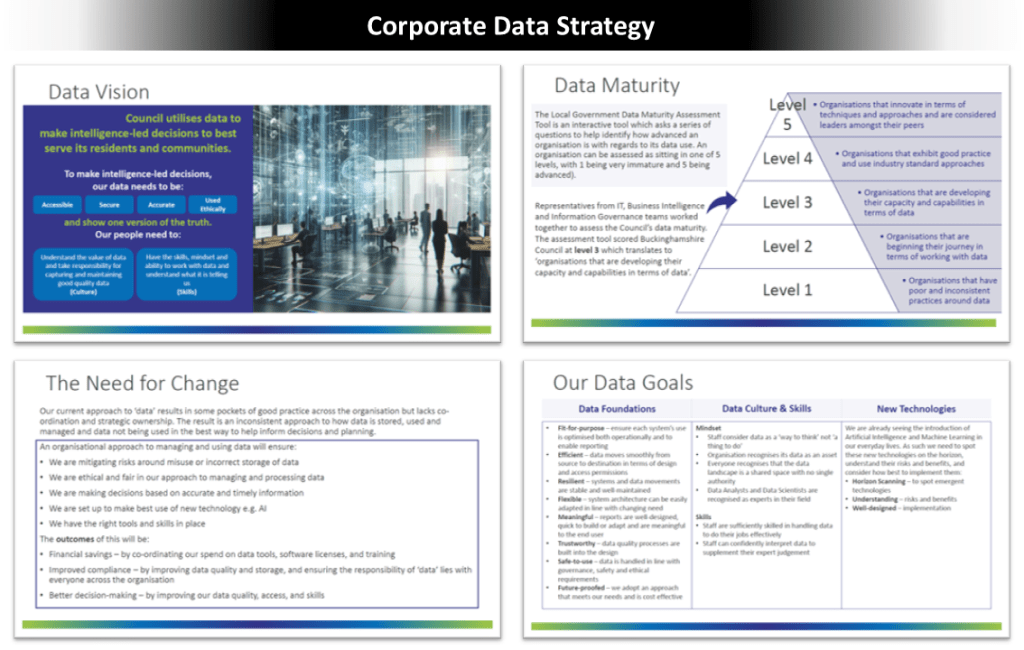

Slide 1: Corporate Data Strategy
Situation: An organisation set an ambition to become data- and automation-led within five years but lacked a clear, aligned corporate data strategy to support this transformation.
Actions: Working closely with the Chief Technology Officer (CTO), I co-developed a corporate data strategy aligned to the organisation’s business goals and long-term vision. The strategy focused on consistent and secure data collection, storage, and analysis; improving data quality and accessibility; fostering a data-driven culture; and automating routine, low-value processes to release capacity for higher-value work.
Results: The strategy provided a clear roadmap for becoming data- and automation-led, improving decision-making, increasing operational efficiency, and embedding data as a core organisational asset rather than a by-product of operations.
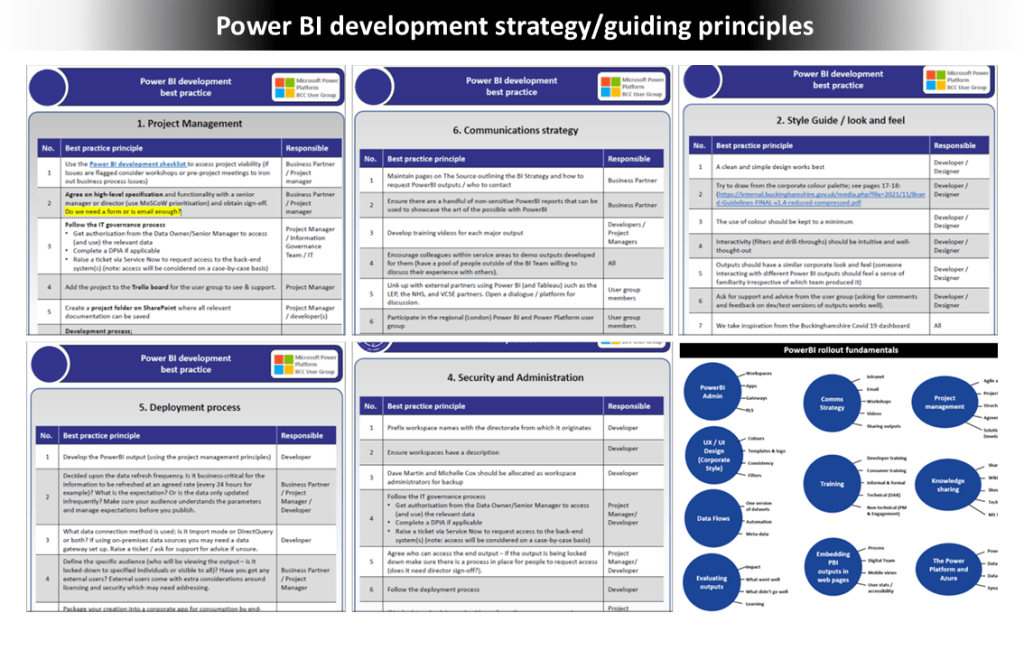
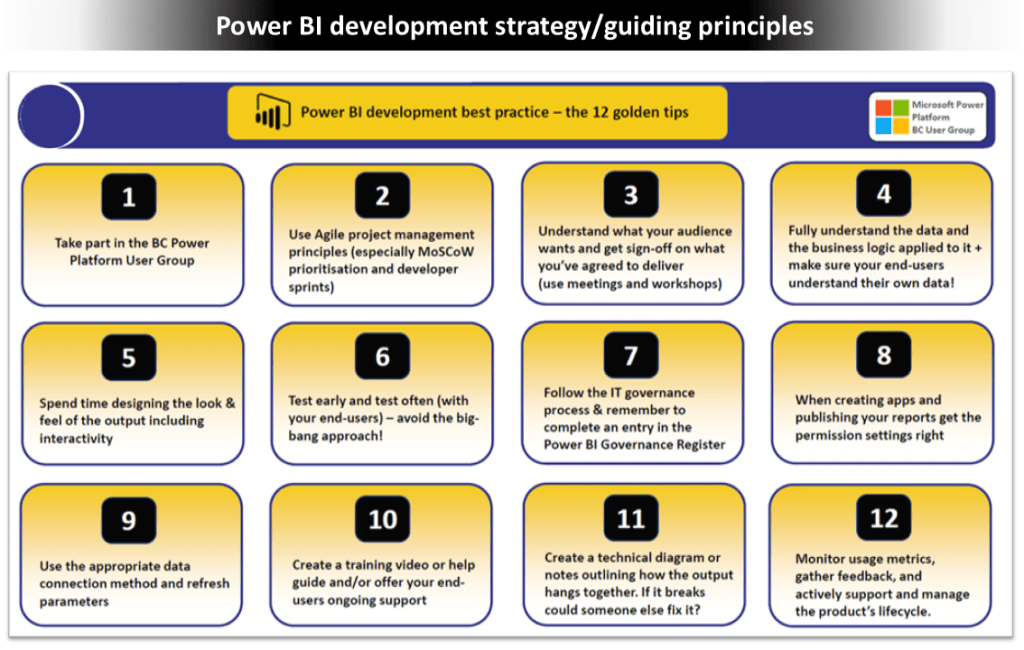
Slide 2 & 3: Power BI development strategy/guiding principles
Situation: A local authority wanted to adopt Power BI as its primary business intelligence platform but lacked funding, governance, and consistent development practices, limiting the impact of existing analytics work.
Actions: I led a multifaceted programme to enable Power BI adoption. This included developing a full business case to secure funding for licensing upgrades, articulating return on investment through improved insight and efficiency. I established a Power BI superuser group drawn from across the organisation and led workshops to create best-practice guidelines covering product scoping, Agile project management, prioritisation, UX/UI design, testing, iteration, and end-user support. A core focus was building a collaborative community of practice among developers.
Results: The work enabled a coordinated, scalable approach to Power BI development. It improved consistency and quality across dashboards, accelerated delivery of insight, increased user confidence, and fostered a strong, collaborative analytics community across organisational boundaries.
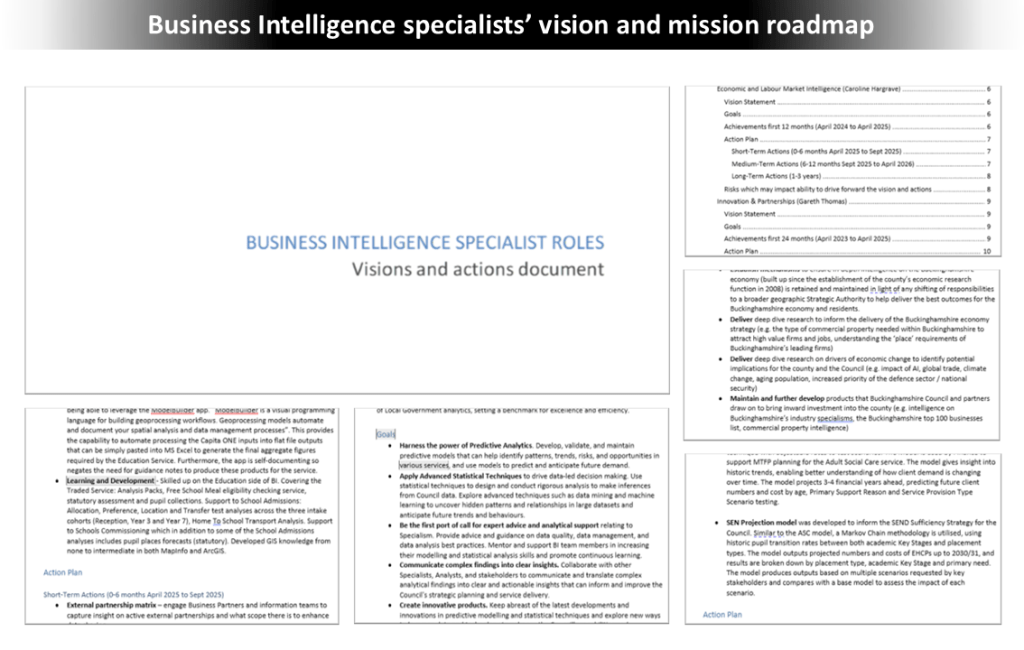
Slide 4: Business Intelligence specialists’ vision and mission roadmap
Situation: Data and BI specialists within a public-sector organisation lacked a shared vision and struggled to articulate their value to senior leaders, limiting strategic impact and visibility.
Actions: I collaborated with corporate leaders to capture strategic expectations and worked closely with BI specialists to translate these into a clear vision, mission, and action plan focused on data science, predictive analytics, and future readiness. I also coordinated presentations and engagement sessions, enabling specialists to communicate how their skills could improve outcomes and resource planning across the organisation.
Results: The initiative produced a cohesive BI vision and roadmap, raised the profile of data professionals, strengthened alignment with corporate priorities, and improved the specialists’ confidence and effectiveness in engaging with C-suite stakeholders.
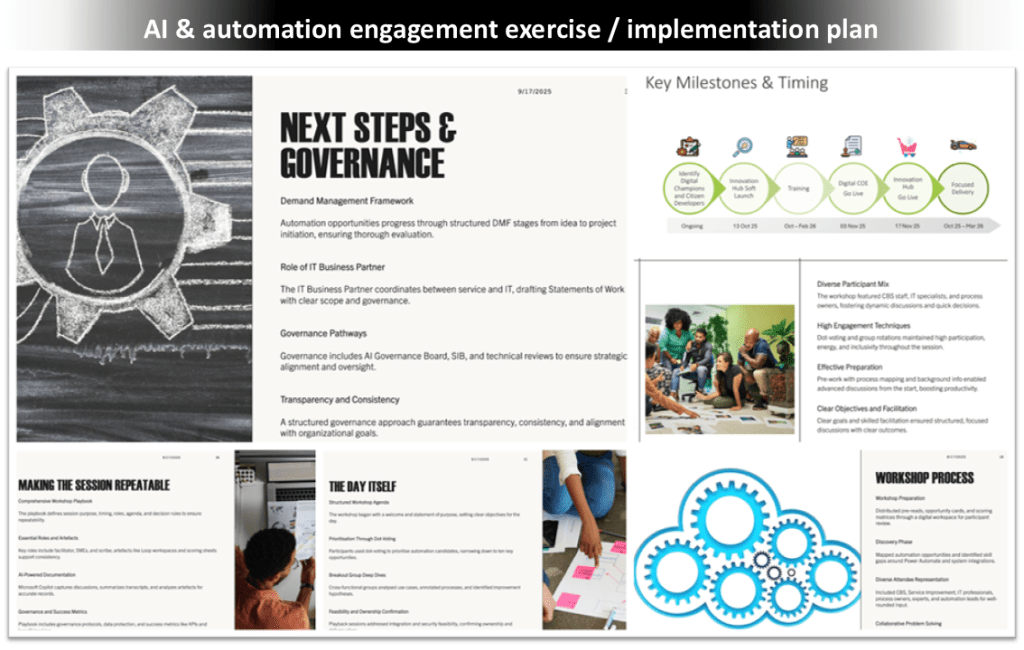
Slide 5: AI & automation engagement exercise / implementation plan
Situation: A public-sector organisation wanted to explore AI and automation opportunities but needed a structured, ethical, and evidence-based approach to identify high-impact use cases.
Actions: I co-led stakeholder engagement workshops to identify pain points and map high-volume, repetitive processes suitable for automation. Working with IT and business teams, we assessed opportunities across document processing, citizen enquiries, compliance reporting, and case notetaking. We scored opportunities based on cost savings, efficiency gains, and feasibility, while embedding ethical, transparency, and regulatory considerations.
Results: The exercise produced a phased AI and automation roadmap, enabling measurable efficiency gains while maintaining public trust, accountability, and service quality.
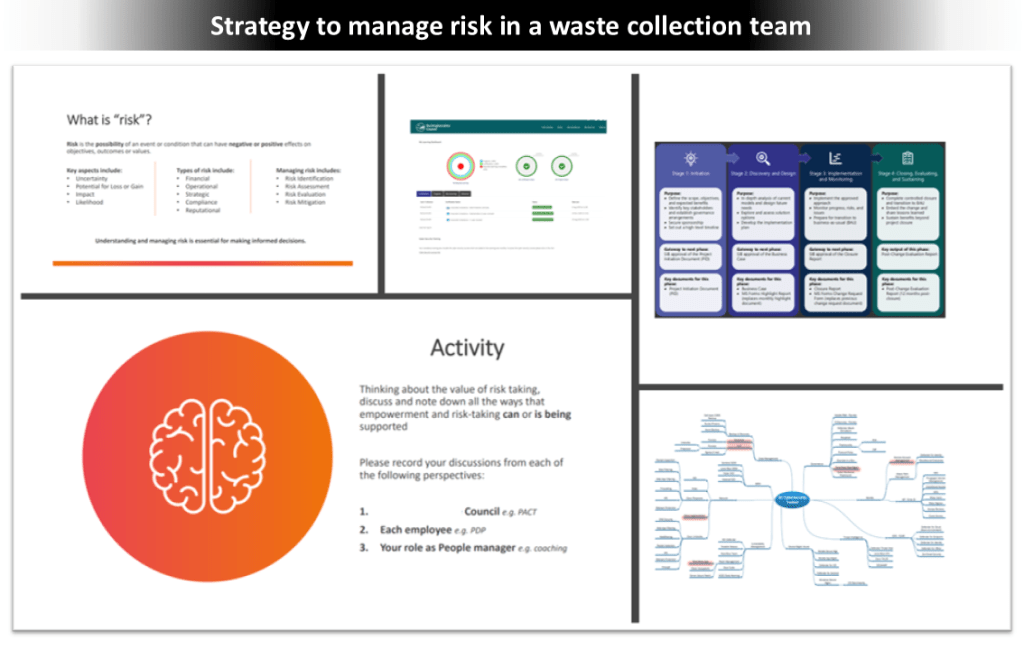
Slide 6: Strategy to manage risk in a waste collection team
Situation: A waste collection service faced significant operational risks, high sickness and turnover, and low morale driven by rigid working patterns and demanding conditions.
Actions: I worked with managers and supervisors to strengthen risk management around safety-critical issues while introducing data-led flexibility in shift patterns. Using analytics and GIS route-mapping software, we redesigned routes and schedules to reduce fatigue, improve coverage, and allow greater flexibility. The approach was piloted, refined through feedback, and supported by enhanced training and monitoring.
Results: The strategy reduced fatigue-related risk, improved morale and inclusivity, and lowered sickness and turnover while maintaining service standards. It embedded a culture of informed, calculated risk-taking that balanced safety, efficiency, and staff wellbeing.
Slide 7: Development of a vision for a corporate transformation team
Situation: A corporate transformation team lacked a clear, shared vision and repeatable approach, limiting its ability to drive innovation, efficiency, and cultural change across the organisation.
Actions: I helped define a clear transformation vision centred on innovation, efficiency, resilience, and customer focus. I developed a coordinated toolkit of visuals and repeatable processes to support consistent delivery, breaking down silos and modernising legacy processes through digital tools and data-driven decision-making.
Results: The work aligned departments around a shared understanding of transformation, reframed it as a culture of adaptability and continuous improvement, and empowered teams to deliver sustainable improvements in performance, cost control, and employee engagement.

