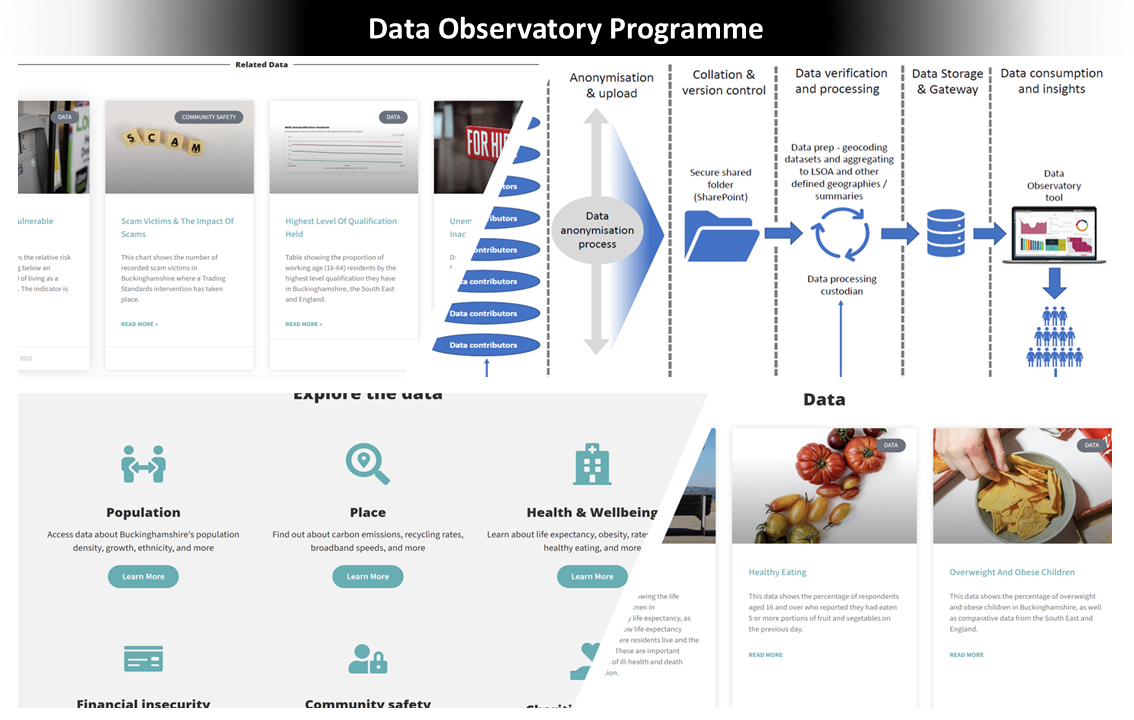
Slide 1: Data Observatory Programme – Multi-Org Data Cleansing and Integration
Situation: Charities and local public-sector partners in a region of England wanted to integrate multiple, disparate datasets into a single data observatory tool. This was to identify need and demand and to provide evidence for future funding opportunities. However, data quality issues, differing organisational standards, and legal/data protection constraints made the project highly complex.
Actions: I project-managed business analysis, technical architecture, conceptual modelling, implementation, and the creation of data-sharing agreements. I coordinated stakeholders from multiple charities and organisations, balancing ambitious goals with practical limitations on budget, data quality, and regulatory compliance.
Results: The data observatory was successfully delivered, providing an integrated platform that continues to support decision-making, identify people in need, and uncover funding opportunities across partner organisations.
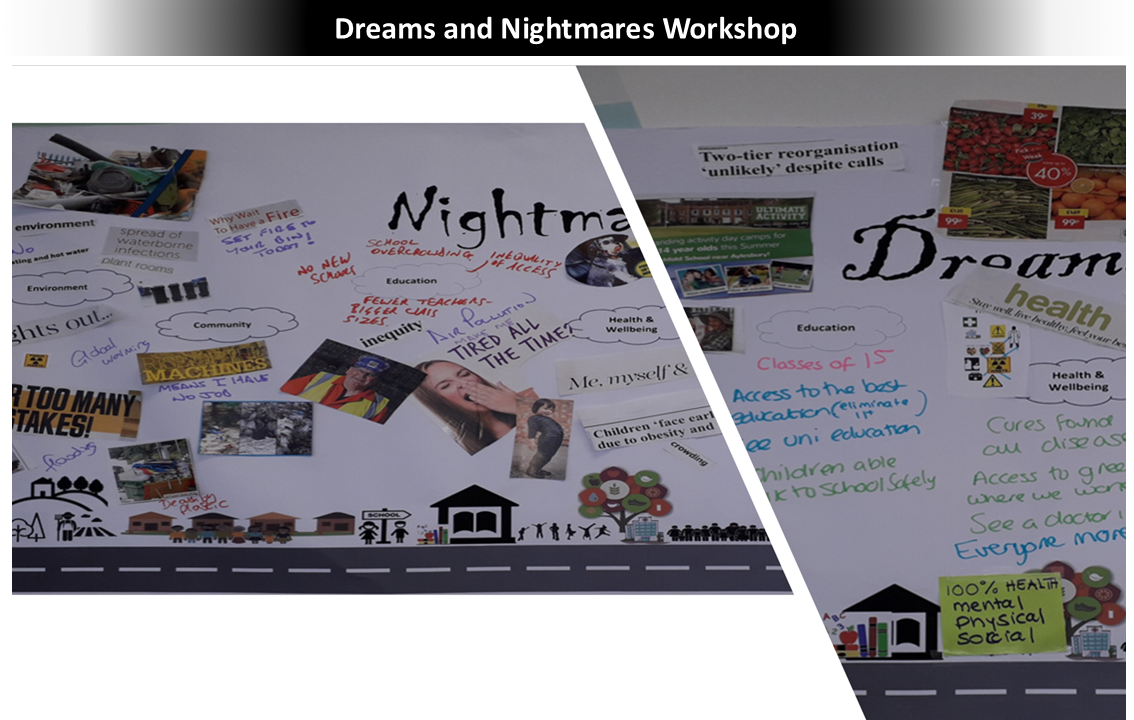
Slide 2: Dreams and Nightmares Workshop – Local Authority Transformation
Situation: A combined local authority was beginning a large-scale transformation programme, and staff engagement was low, particularly among those sceptical of the initiative.
Actions: I designed and delivered a workshop that invited staff to envision best-case (“dream”) and worst-case (“nightmare”) scenarios for service delivery. The session was interactive, fun, and structured to gather actionable input, which was then fed back to the corporate management team.
Results: The workshop generated rich insights into staff expectations and concerns, providing a clear, prioritised set of recommendations that informed the wider transformation programme and helped increase staff engagement.
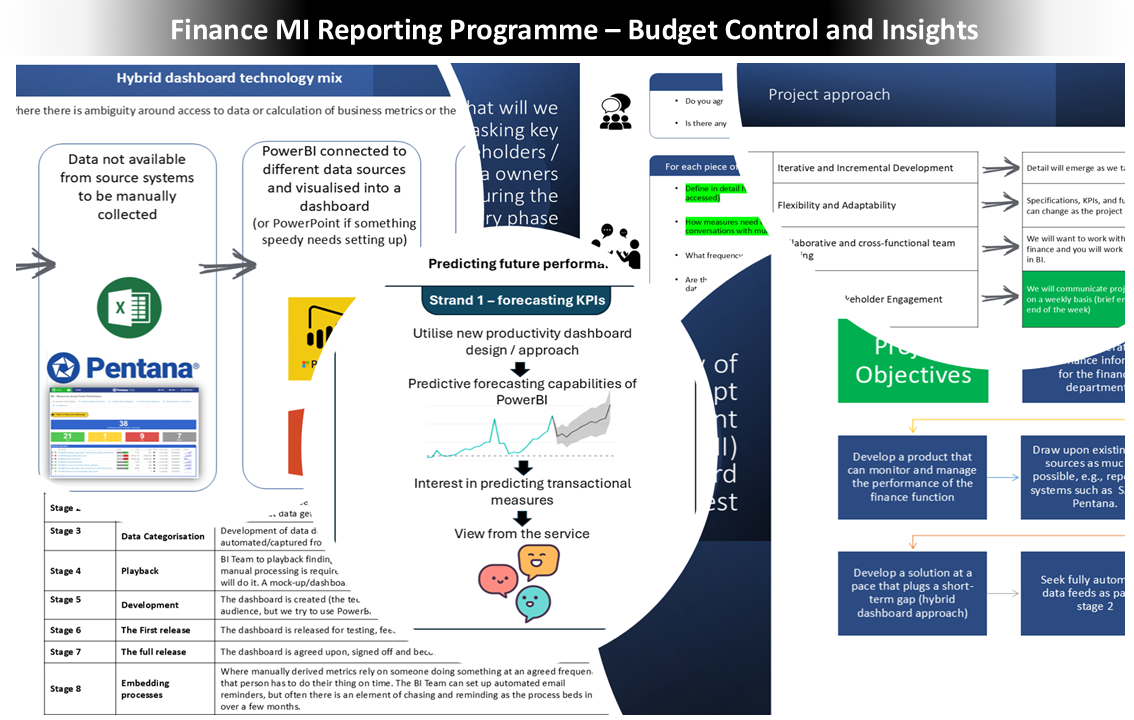
Slide 3: Finance MI Reporting Programme – Budget Control and Insights
Situation: The corporate finance department required centralised, accurate management information to improve budget controls and operational insight, but data came from diverse systems of varying quality.
Actions: I led an Agile delivery programme to develop a complete suite of analytical dashboards. I integrated multiple data sources using a hybrid approach—automating some feeds, creating manual inputs where necessary, and iteratively testing through sprints to incrementally build the reporting capability.
Results: The project delivered a consolidated, accurate reporting suite, improving budget control and enabling better-informed financial decision-making. Incremental delivery allowed rapid adoption and reduced risk compared with a “big bang” approach.
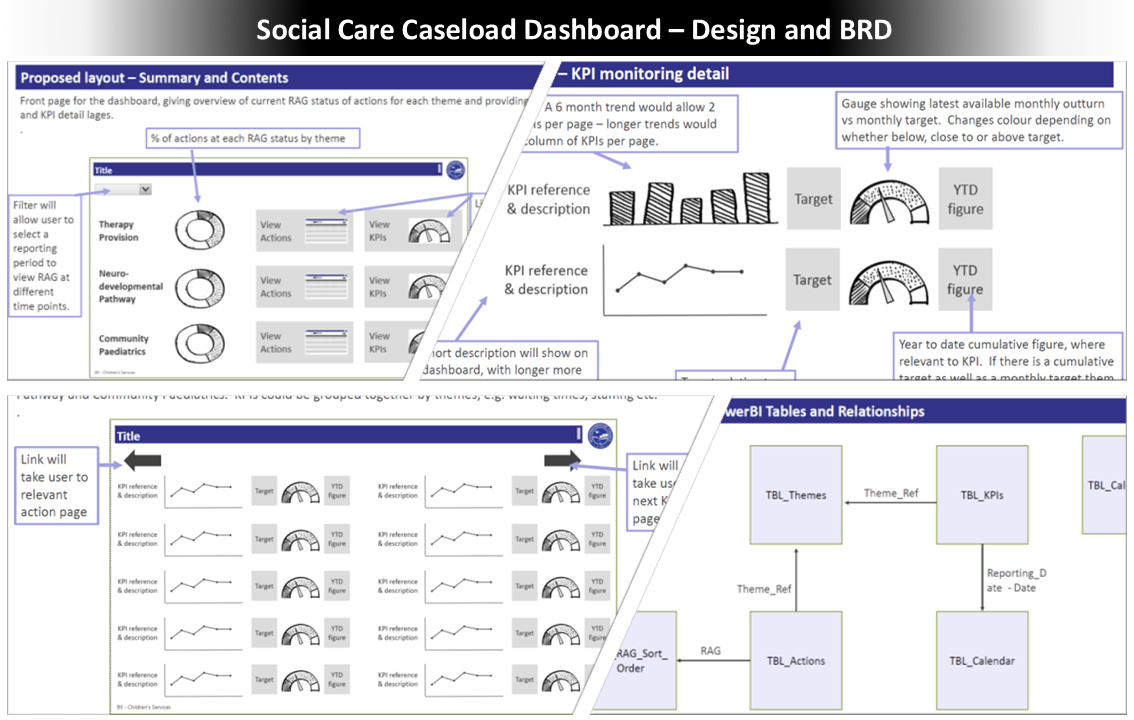
Slide 4: Social Care Caseload Dashboard – Design and Business Requirements Document (BRD)
Situation: A social care manager had experienced a failed Agile dashboard project and required a traditional, structured approach to produce a caseload dashboard with multi-layer sign-off and clear documentation.
Actions: I led detailed requirements gathering, created a Business Requirements Document (BRD), and facilitated dashboard design workshops. To accommodate highly stretched staff, I produced short (< 2-minute) explanatory videos for UAT and feedback, allowing staff to review content asynchronously.
Results: The project successfully delivered a signed-off, user-approved dashboard that captured the necessary caseload and case management information, streamlining workflow, reducing staff burden, and increasing adoption.
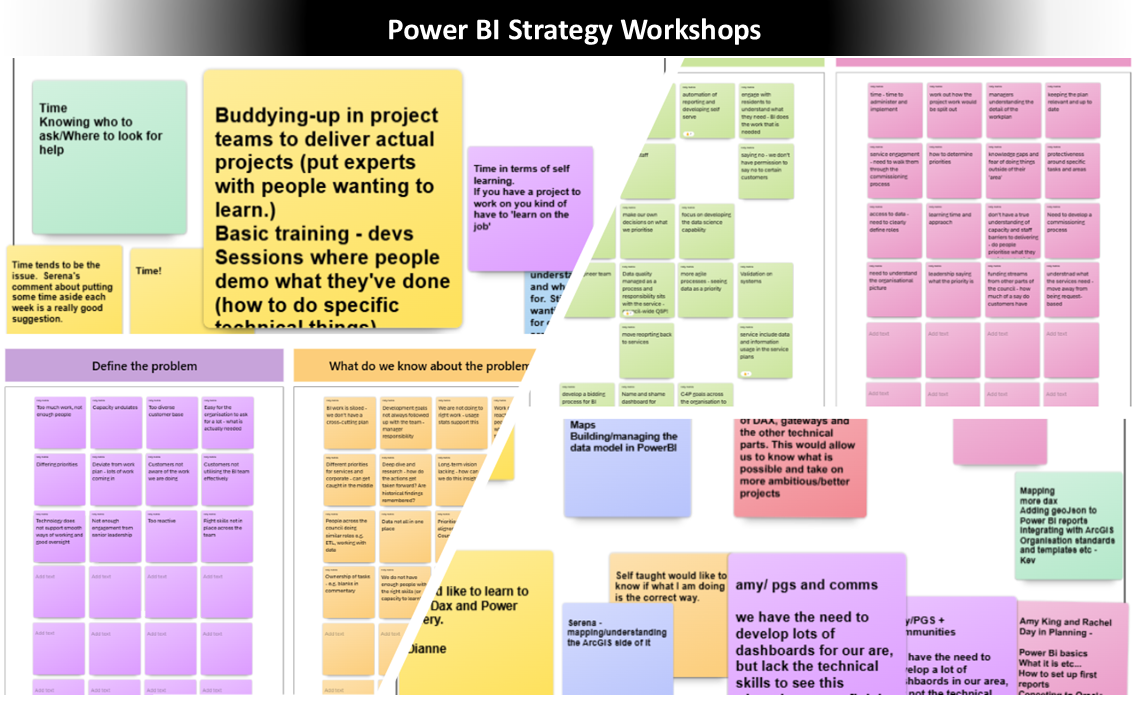
Slide 5: Power BI Strategy Workshops
Situation: An organisation sought to adopt Power BI across teams but lacked awareness, skills, governance, and a structured approach to ensure adoption and consistent practice.
Actions: I designed and ran a 12-month programme of workshops covering: introductory sessions on benefits and alignment with organisational goals; hands-on training in dashboard creation and data connections; governance and security standards; and ongoing support through a community of practice for advanced users.
Results: The programme built organisational capability in Power BI, established governance standards, created a collaborative community of practice, and ensured sustainable adoption and continuous improvement.
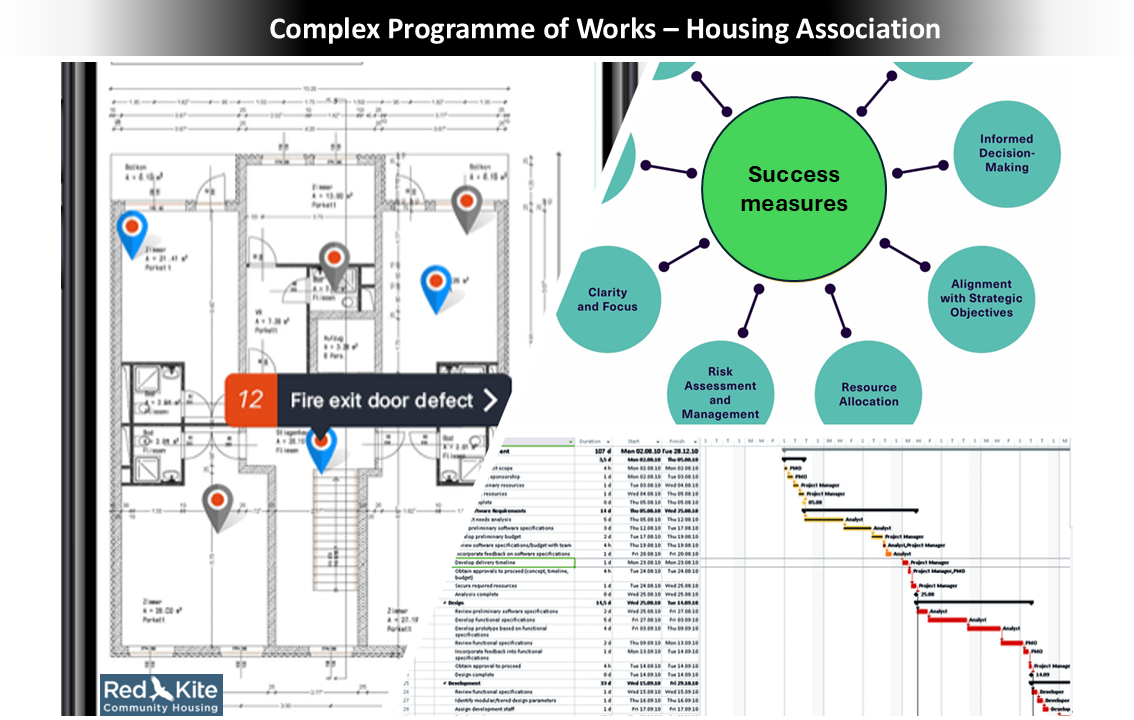
Slide 6: Complex Programme of Works – Housing Association Building Maintenance & Upgrades
Situation: A Housing Association needed to coordinate a large-scale programme of building maintenance and upgrades while ensuring compliance, quality, and positive resident outcomes.
Actions: I coordinated project management documentation and record-keeping, including asset registers, stock surveys, scope of works, design specifications, risk assessments (CDM), resident consultation records, and procurement/contract documentation. I oversaw dashboards tracking KPIs (cost, schedule, quality, H&S incidents, resident satisfaction), monthly governance reporting, site audits, and post-project evaluation.
Results: The structured programme ensured compliance with safety and quality standards, improved transparency and contractor performance, enhanced resident outcomes, and created an updated, continuously improving asset data record for future maintenance planning.
 David Cook